Skin22 Nov 2026
MNRF vs Fractional CO2 for Acne Scars: How We Choose
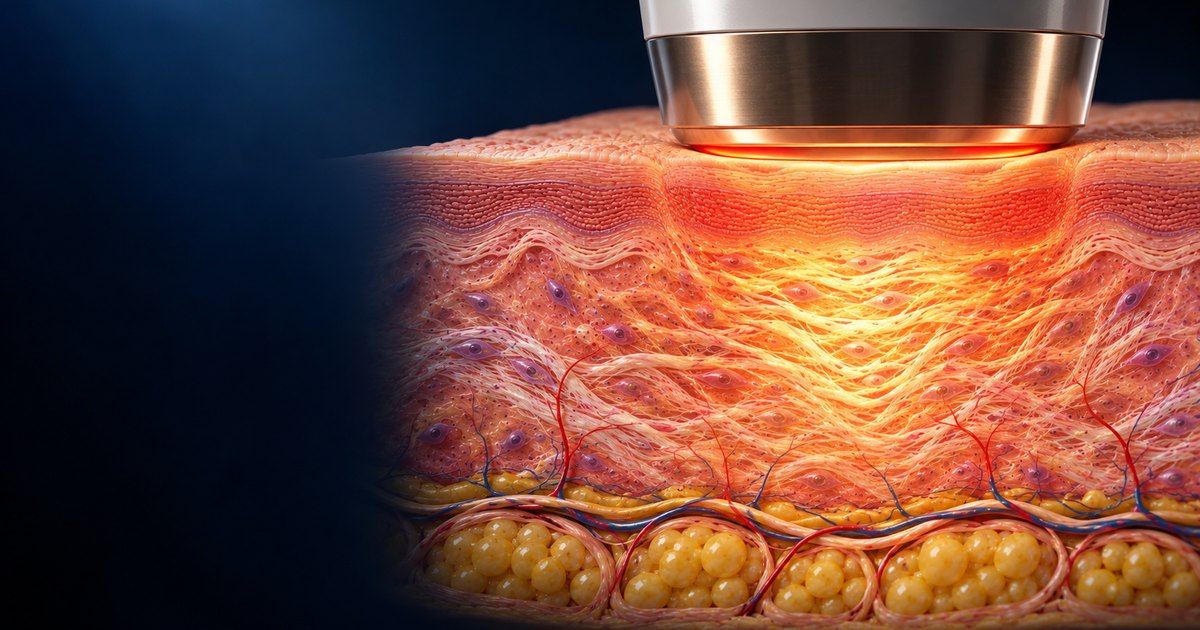
Both treatments remodel acne scars and both are well suited to Indian skin. The difference is the route they take. MNRF carries radiofrequency energy through insulated microneedles and releases it at a set depth, so the heat is placed where the scar sits while the surface is comparatively protected. Fractional CO₂ works from the surface downward in a grid of microscopic columns, remodelling more powerfully and resurfacing texture at the same time. MNRF suits deeper remodelling with less surface disruption; fractional CO₂ suits defined scars and surface texture. For many faces the honest answer is both, used in sequence.
How each one actually works
MNRF — microneedling radiofrequency
Fine insulated needles pass through the skin surface and deliver radiofrequency energy from their tips at a depth the operator sets. Because the needles are insulated along their shaft, the energy is released at the target depth rather than along the whole track. The surface is penetrated but comparatively spared, and the collagen-stimulating heat is placed in the dermis where the scar sits.
The practical consequences: depth can be dialled in per region of the face, surface disruption is modest, and recovery is short.
Fractional CO₂ laser
The laser treats the skin in a grid of microscopic columns, vaporising tissue in each column and leaving untreated skin in between. That surrounding untreated skin is what drives rapid healing, and the columns themselves trigger a strong collagen response.
It works from the surface downward, so it resurfaces texture and remodels at depth in the same pass. It is the more powerful of the two and the stronger choice where scars are defined and the overall surface needs refinishing.
Side by side
| MNRF | Fractional CO₂ | |
|---|---|---|
| Energy | Radiofrequency, released at depth | Laser light, absorbed by water in tissue |
| Route to the scar | Through the needle, into the dermis | From the surface downward in columns |
| Surface effect | Modest — needle channels only | Greater — the surface is resurfaced |
| Depth control | Set precisely, adjustable by region | Set by energy and density settings |
| Best suited to | Rolling and boxcar scars, open pores, laxity | Defined boxcar scars, ice-pick scars, overall texture |
| Typical recovery | Shorter | Longer |
Which one suits which scar
Scar shape is what decides this, which is why the scar map comes first.¹
Rolling scars are tethered from underneath. Neither device lifts a scar that is anchored, so subcision comes first to release the tethering — then MNRF is usually the better follow-up, because the remodelling needs to happen at depth.
Boxcar scars have defined walls. Fractional CO₂ addresses those edges well. Shallower boxcars respond to MNRF too, and a mixed face often gets both.
Ice-pick scars are narrow and deep. Neither device is really designed to reach the base of a puncture-shaped scar, which is why TCA CROSS — applying a high-strength agent to the base of that individual scar only — is the matched technique, usually alongside one of the two devices for the surrounding skin.
Open pores and early laxity alongside the scarring tip the balance towards MNRF.
Overall rough texture across the cheeks tips it towards fractional CO₂.
What the evidence says about choosing
Reviews comparing the two find that both produce clinically relevant improvement in atrophic acne scars, with the better option depending on scar type, severity, skin type, patient preference and how much recovery time a person can give.²
More usefully, the evidence does not frame this as a contest. Because scar subtypes differ in shape, procedures suited to one are not suited to another, and combining procedures leads to better outcomes where deep scars of several types sit alongside fine textural irregularity.²
The specific combination of RF microneedling with fractional CO₂ has been reviewed on its own and found to be a safe and effective approach for acne scarring, with a single combined treatment producing noticeable improvement in scar severity and patients returning to normal activities within seven days.³
Both are suited to Indian skin — with the right settings
Most Indian skin falls into Fitzpatrick types IV to VI, which carries more melanin. MNRF has a natural advantage here, because the insulated design places the energy below the surface rather than through it.
Fractional CO₂ is also used confidently in these skin types — with conservative settings, careful density, skin prepared in advance and supported afterwards. This is a matter of how the device is run rather than whether it can be used. A planned course at measured settings delivers the result while keeping the skin comfortable and the colour clean.
Every course at Auraa begins with a test area, and settings are confirmed from how your skin actually responded rather than from an assumption.
So which should you have?
For most faces, the honest answer is both, in a planned sequence — subcision where rolling scars are tethered, TCA CROSS for ice-pick scars, then MNRF and fractional CO₂ used where each does its best work, with the marks addressed by laser toning alongside.
A clinic that recommends the same single device for every scar on every face is recommending the device it owns. The scar map is what turns that into a plan.
Full detail on each treatment is on our acne scar treatment page, and the session schedule is covered in How Many Sessions Does Acne Scar Treatment Take?
Frequently asked questions
Is MNRF better than fractional CO2 for acne scars?
Neither is universally better. MNRF places energy at a set depth with modest surface disruption, which suits rolling and shallower boxcar scars, open pores and early laxity. Fractional CO2 remodels more powerfully and resurfaces texture, which suits defined boxcar scars and overall rough texture. Reviews find both produce clinically relevant improvement, with the choice depending on scar type, skin type and recovery time.
Can MNRF and fractional CO2 be combined?
Yes, and the combination has been reviewed specifically. A systematic review and two-centre case series found combination RF microneedling with fractional CO2 to be a safe and effective treatment for acne scarring, with a single combined treatment producing noticeable improvement and patients returning to normal activities within seven days.
Which is safer for Indian skin?
Both are used in Fitzpatrick IV to VI with settings built for melanin-rich skin. MNRF has a design advantage in that the insulated needles place energy below the surface rather than through it. Fractional CO2 is used with conservative settings, careful density, skin prepared beforehand and supported afterwards. Every course here starts with a test area.
Which has less downtime?
MNRF generally has the shorter recovery, because the surface is penetrated by needle channels rather than resurfaced. Fractional CO2 asks for more recovery time in exchange for stronger remodelling and resurfacing in the same session.
What about rolling scars that have not responded to laser elsewhere?
Rolling scars are tethered down by fibrous strands from beneath, and no amount of surface resurfacing lifts a scar that is anchored. Subcision releases those tethers first, after which MNRF or fractional CO2 can do its work. This is the most common reason rolling scars improve here after not responding elsewhere.
References
- Connolly D, Vu HL, Mariwalla K, Saedi N. Acne Scarring — Pathogenesis, Evaluation, and Treatment Options. Journal of Clinical and Aesthetic Dermatology. 2017;10(9):12–23. https://pmc.ncbi.nlm.nih.gov/articles/PMC5749614/
- Meghe S, Saoji V, Madke B, Singh A. Efficacy of Microneedling and CO2 Laser for Acne Scar Remodelling: A Comprehensive Review. Cureus. 2024;16(2):e55092. https://pmc.ncbi.nlm.nih.gov/articles/PMC10978375/
- Mandavia R, Cariati M, Shahidi S, Spencer C, Somenek M, Lapa T. Combination radiofrequency microneedling and carbon dioxide laser for acne scarring: A systematic review and retrospective case series across two centers. Journal of Cosmetic Dermatology. 2022;21(11):5672–5679. https://pubmed.ncbi.nlm.nih.gov/35896510/
Every source above was opened and checked against the claim it supports before publication.
Medically reviewed by Dr. Fatima Sajeeda — Integrative Medicine Practitioner, Expert in Medical Aesthetics, Cosmetologist & Trichologist · 16+ years · International Faculty, IEB UK · Auraa Skincare Clinic, Film Nagar, Hyderabad
Book an Acne Scar Assessment on WhatsApp← Back to the Journal