Hair22 Nov 2026
Sudden Hair Fall After Illness, Fever or Childbirth: What It Usually Is
If your hair started shedding heavily and you can trace it back to something that happened two to four months earlier — a fever, an illness, surgery, childbirth, a crash diet or a period of real stress — this is very likely telogen effluvium, and the outlook is good. More hairs than usual moved into the resting phase at once and let go together a few months later. Each one that leaves is replaced by a new growing hair, so there is no danger of complete baldness, and fullness returns as the new hairs come through. It rarely lasts longer than six months, and most cases run their course within six to nine.
What is actually happening
Hair grows in cycles rather than continuously. At any moment, around 85 to 90 per cent of the hairs on a scalp are in the active growing phase, and the rest are resting. A hair typically grows for two to four years, rests for two to four months, then lets go and is replaced by a new hair coming up underneath. For most people that works out at around 100 hairs a day, which is simply the system functioning.¹
In telogen effluvium, a shock to the body pushes a much larger share of hairs into the resting phase at the same time — typically around 30 per cent instead of the usual 10 to 15. Those hairs then rest in place for two to four months before letting go. That is why you can lose roughly 300 hairs a day for a period, and why the shedding begins months after the event rather than during it.¹
The delay is the single most confusing part for patients. By the time the hair starts falling, the illness or the surgery feels like old news — so the connection is missed, and the shedding feels like it came from nowhere.
The common triggers
Any of these, two to four months before the shedding started, is worth mentioning at your consultation:¹
- A high fever, severe infection or other significant illness
- Surgery, or major physical trauma
- Childbirth — one of the most common triggers we see
- Sudden or extreme weight loss, or an abrupt change in diet
- Major psychological stress
- Iron deficiency
- Thyroid change, in either direction
- Starting or stopping certain medications
Often more than one applies. A difficult illness followed by a period of poor eating and poor sleep is a very typical picture.
Why the outlook is good
This is the part worth reading twice.
In telogen effluvium the follicles are not lost. Each hair pushed early into the resting phase is replaced by a new, growing hair, so there is no danger of complete baldness. Because scalp hair grows slowly, the hair may feel or look thinner for a period — and then fullness returns as the new hairs come in.¹
It rarely lasts longer than six months, and the prognosis is described as very good, with most cases running their course within six to nine months.¹
In other words, the hair you are losing is on its way back. The job of a good consultation is to confirm that is what is happening, remove anything still contributing, and give you a baseline so you can watch the recovery rather than worry about it.
How we confirm it
History. What was happening in your life three to four months before the shedding started. This single question answers it more often than any test.
Scalp examination and a pull test. Telogen hairs have a characteristic white bulb at the end that was in the scalp, and no gel-like covering — they look different from hairs broken off mid-shaft.¹
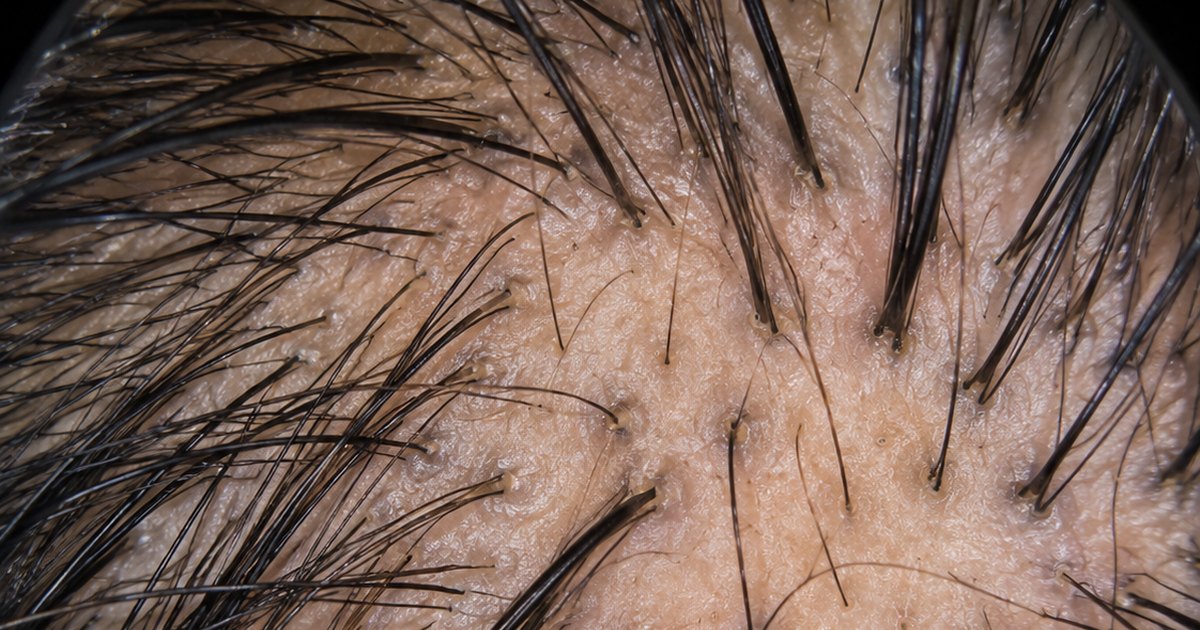
Trichoscopy. Magnified examination showing whether the follicles are open and healthy, and whether hair calibre is even. This is also how we check whether slow pattern thinning is running underneath the shedding, which is common and changes the plan.
Blood work where indicated. Iron studies, thyroid function, vitamin D and B12 are the usual ones, because these are correctable and worth finding.¹
Baseline photographs in standardised lighting, so recovery is measured rather than guessed at.
What actually helps
Correct what is correctable. A documented iron deficiency, a thyroid change, an unbalanced diet — these are the interventions with real leverage, and they are managed with your own doctor where that is needed.¹
Look after the scalp. Flaking, itching and inflammation add shedding of their own, and they settle quickly once treated. This is one of the most satisfying parts of the plan because the response is fast.
Eat enough protein. Hair is built from it, and under-eating protein during recovery from an illness is extremely common.
Reduce mechanical stress. Loosen tight styles, ease off heat and chemical processing while the new hairs come through.
Where regrowth has not returned to a satisfactory level, a doctor may prescribe topical minoxidil to support it.¹
When it is worth getting assessed sooner
Most telogen effluvium settles on its own. It is worth coming in earlier if:
- The shedding has continued beyond six months
- Your parting looks wider, or the ponytail feels thinner than before the episode
- The scalp is itchy, flaking, sore or visibly inflamed
- There are defined bald patches rather than overall thinning — this is a different condition and needs its own assessment
- You simply want the reassurance of a diagnosis and a baseline photograph
That last reason is a perfectly good one. A great deal of the distress in this condition comes from not knowing what it is, and that is fixed in a single visit.
Shedding and thinning can happen together
One pattern worth knowing: an episode of shedding sitting on top of slow pattern hair loss that was already present. The sudden fall makes the gradual thinning visible for the first time, and the two get read as a single catastrophe.
They are two separate, treatable things, and they need different plans running alongside each other — which is exactly why telling them apart at the start matters. Full detail is on our hair loss treatment page.
Frequently asked questions
Why did my hair start falling months after I was ill?
Because hairs pushed into the resting phase stay in place for two to four months before letting go. The shedding you notice today reflects something that happened two to four months ago, which is why the connection is so often missed.
Will my hair grow back after telogen effluvium?
Yes. Each hair pushed early into the resting phase is replaced by a new growing hair, so there is no danger of complete baldness and fullness returns as the new hairs come through. It rarely lasts longer than six months, and most cases run their course within six to nine months.
How much hair fall is normal?
Around 100 hairs a day is normal for most people. In telogen effluvium that can rise to roughly 300 a day for a period, because a larger share of hairs than usual moved into the resting phase together.
Is hair fall after childbirth the same thing?
Yes. Childbirth is one of the most common triggers for telogen effluvium, through the abrupt hormonal change. It follows the same pattern — shedding starting a few months afterwards and resolving as the new hairs come through.
Do I need blood tests?
Often yes. Iron studies, thyroid function, vitamin D and B12 are the common ones, because a documented deficiency is correctable and is one of the most reliable things that can be done for hair. Results needing medical management are reviewed with your own doctor.
When should I see someone about it?
If the shedding has gone past six months, if your parting looks wider than before, if the scalp is itchy, flaking or sore, if there are defined bald patches rather than overall thinning, or simply if you want a diagnosis and a baseline photograph so you can see the recovery happening.
References
- Telogen Effluvium. Harvard Health Publishing, Harvard Medical School, reviewed October 2024. https://www.health.harvard.edu/a-to-z/telogen-effluvium-a-to-z
Every source above was opened and checked against the claim it supports before publication.
Medically reviewed by Dr. Fatima Sajeeda — Integrative Medicine Practitioner, Expert in Medical Aesthetics, Cosmetologist & Trichologist · 16+ years · International Faculty, IEB UK · Auraa Skincare Clinic, Film Nagar, Hyderabad
Book a Hair & Scalp Assessment on WhatsApp← Back to the Journal