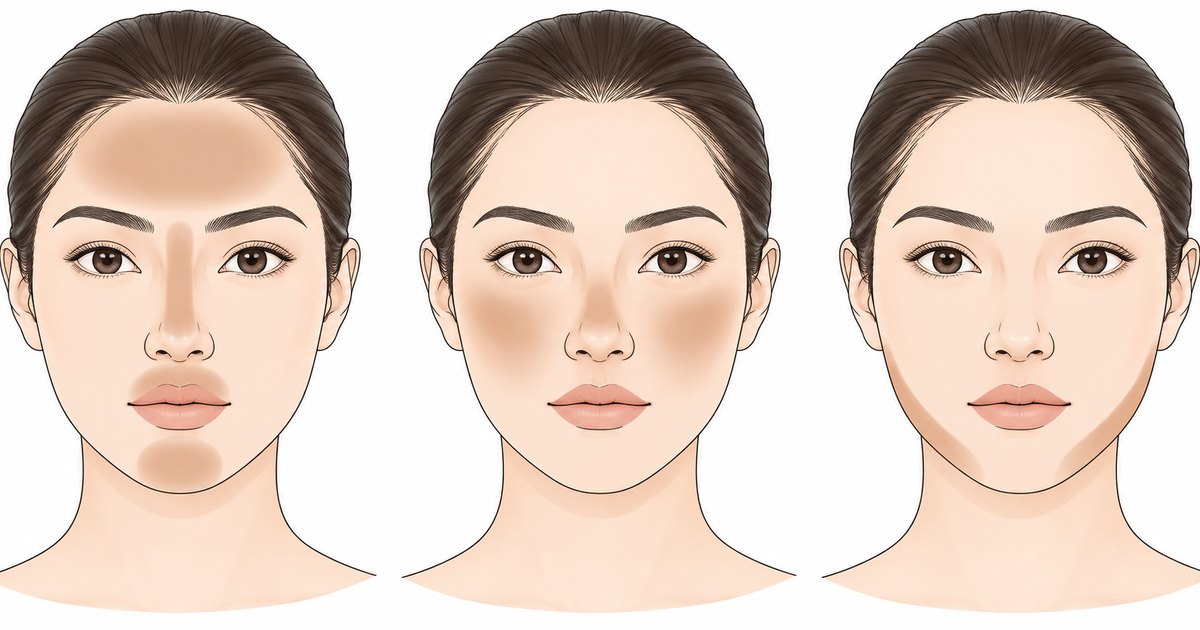
Illustration: the three common melasma distribution patterns
Pigmentation responds beautifully to treatment when the right kind is identified first. Melasma, post-inflammatory hyperpigmentation and sun-induced spots look similar on the face but behave differently, and each has its own best approach. At Auraa we begin every pigmentation case with a structured skin assessment, then build a plan around what we find — combining medical skincare, calibrated laser and consistent photoprotection. Most patients see meaningful change within eight to twelve weeks of a well-matched plan.
Why pigmentation needs a diagnosis before a treatment
The single factor that most determines your result is whether the pigmentation was correctly identified at the start.
Melasma is driven by hormones, sunlight, visible light and heat. Post-inflammatory hyperpigmentation follows something that inflamed the skin — acne, eczema, waxing, a vigorous facial. Sun-induced spots accumulate over years of exposure. Three different causes, three different plans.
The depth of the pigment matters just as much as the type. Pigment near the surface clears more readily; pigment that has settled deeper improves more gradually. A Wood's lamp examination helps identify which you have,¹ and knowing it at the start is what allows us to set a realistic timeline rather than a hopeful one.
This is one visit. It is also the visit that makes the following months productive.
The three types we treat most often
| Melasma | Post-inflammatory pigmentation | Sun-induced spots | |
|---|---|---|---|
| Appearance | Symmetric patches, soft edges | Marks exactly where skin was inflamed | Scattered, well-defined spots |
| Usual sites | Cheeks, forehead, upper lip | Sites of past acne, wax, procedures | Face, hands, forearms |
| Main drivers | Hormones, UV, visible light, heat | Any inflammation or injury | Cumulative sun exposure |
| Behaviour | Fluctuates with season and heat | Fades steadily once inflammation settles | Stable; accumulates gradually |
| Approach | Gentle, layered, maintenance-led | Treat the cause, then the pigment | Targeted treatment plus photoprotection |
Many patients have more than one type at once — commonly melasma alongside marks left by old acne. Where that happens, we treat them in a considered order rather than all at once.
Why Indian skin needs a particular approach
Most Indian skin falls into Fitzpatrick types IV to VI, meaning it carries more melanin and its pigment cells respond readily. That responsiveness is why Indian skin ages well and burns less. It also means pigment cells react quickly to heat, friction and inflammation.
Post-inflammatory pigmentation is correspondingly more common in these skin types — among people with richly pigmented skin who have acne, the reported rate reaches as high as 65%.¹
The practical consequence is that gentle and consistent outperforms aggressive in Indian skin. Conservative settings repeated across a course achieve what a single strong session cannot, and keep the skin comfortable throughout. This is the reason calibration matters more than the brand name on a machine — and the reason we patch test before every laser course.
How we assess your pigmentation
Your first visit is an assessment, not a sales conversation.
Pattern and history. When it began, what was happening at the time, whether it changes with the seasons, what you have already used and how your skin responded.
Depth. Examined with a Wood's lamp where appropriate, because depth shapes both the plan and the timeline.¹
Medical and hormonal context. Thyroid function, pregnancy, contraceptive use and certain medications all influence pigmentation, as does anything currently inflaming the skin.
A patch test, before any laser course begins.
From that, Dr. Fatima builds a plan that usually combines in-clinic treatment, medical skincare and maintenance — because pigmentation responds best to all three working together.
Treatment options at Auraa
Treatment is stepwise and almost always combined. The evidence consistently favours combination approaches over any single product or device.¹
Medical skincare
The foundation of every pigmentation plan. Commonly used categories include tyrosinase inhibitors such as hydroquinone, retinoids such as tretinoin, and agents including azelaic acid, kojic acid, niacinamide and vitamin C. Tranexamic acid is used in melasma, and topical cysteamine is a newer option.¹
Chemical peels
Superficial peels lift pigment-carrying surface cells and improve clarity. In melanin-rich skin, depth and formulation are chosen carefully — gentler peels repeated across a course suit Indian skin better than deeper single treatments.
Laser — Pico and Q-switched Nd:YAG
We hold both, which means the device is matched to your pigmentation rather than your pigmentation matched to whichever machine is in the room.
The Pico laser works in picoseconds — trillionths of a second — delivering a rapid pressure pulse that breaks pigment into very fine particles your body clears naturally. Less heat reaches the surrounding skin, which suits melanin-rich skin particularly well, and it is measurably the more comfortable of the two.²
The Q-switched Nd:YAG works in nanoseconds using controlled heat, and remains highly effective. In a randomised split-face trial in Asian women, both significantly reduced melasma severity.²
Both are also used for carbon toning and tattoo removal.
Advanced IPL
Used for photofacial and pigmentation work in suitable skin types and areas, chosen at assessment.
Photoprotection — the part that holds every result
Standard broad-spectrum sunscreens are formulated against ultraviolet light. Visible light — ordinary daylight in the 400 to 700 nanometre range — also influences pigmentation and is recognised as a meaningful factor in melasma. Conventional sunscreens offer limited protection at those wavelengths, while tinted sunscreens containing iron oxides block visible light considerably better.³
For patients being treated for melasma in Hyderabad, this detail matters more than almost anything else on this page.
What a course looks like
Melasma usually shows early change within 8 to 12 weeks of a well-matched plan, then settles into maintenance. International guidelines describe melasma as a condition that responds best to sustained, layered care rather than one-off intervention.⁴
Post-inflammatory pigmentation in the upper layers generally improves over 6 to 12 months, with deeper pigment continuing to improve gradually beyond that.¹
Sun-induced spots generally respond more definitively.
Two things reliably shorten the timeline: combination therapy, and starting early, while pigment is still near the surface.
Your own expected number of sessions is confirmed after your assessment — never quoted before it. You receive a written plan with clear costs and no pressure-selling.
Maintaining your result
Pigmentation care works best as something maintained rather than finished.
Daily photoprotection, tinted where melasma is involved, reapplied through the day.
Heat awareness. Standing over a hot stove or sitting beside a sunny window both count.
A simple maintenance routine once the active phase ends — this is what holds your result, and patients who stay with it keep their improvement for years.
Hormonal review with your doctor where relevant.
Periodic check-ins, so any change is caught early while it is still easy to address.
Read more on pigmentation
- Why Your Dark Spots Keep Coming Back (And What Actually Works)
- Melasma vs Sunspots: How to Tell the Difference
- Pico Laser for Pigmentation: Why It's Different
- Acne Scar Treatment: Which Treatment Works for Which Scar
Book a pigmentation assessment
Auraa Skincare Clinic & Institute 3rd Floor, Door 302, Falcon Valley Rd, beside Narayanamma Engineering College, opp. DMart, Ambedkar Nagar, Film Nagar, Hyderabad, Telangana 500008
Coming from the Toli Chowki side, continue through towards Shaikpet and Film Nagar — we are on Falcon Valley Road, directly opposite DMart.
Mon–Sat 10:30 AM – 8:00 PM · Sunday by appointment Consultations in English, Hindi, Urdu and Telugu
Frequently asked questions
How long does pigmentation treatment take to show results?
Melasma usually shows early change within 8 to 12 weeks of a well-matched plan. Post-inflammatory pigmentation in the upper layers generally improves over 6 to 12 months.¹ Your expected timeline is explained at your assessment so you know what to expect from the start.
Is laser treatment safe for Indian skin?
Yes, when the device and settings are calibrated for melanin-rich skin. Pico's lower thermal load suits Fitzpatrick IV to VI particularly well. Every course begins with a patch test, settings are built up gradually, and your skin is prepared beforehand.
Can melasma be cured permanently?
Melasma is best understood as a condition managed well over the long term. Substantial, visible improvement that holds for years is entirely achievable with maintenance and consistent photoprotection.⁴
Do I need a consultation before treatment?
Yes. Identifying which type of pigmentation you have, and how deep it sits, is the single biggest factor in a good result. It takes one visit and shapes everything that follows.
How much does pigmentation treatment cost in Hyderabad?
It depends on your diagnosis and the plan built around it, which is why we don't publish a single price. After your assessment you receive a written plan with clear costs.
Can I have treatment during pregnancy?
Some options are deferred during pregnancy and breastfeeding, and treatment is adjusted accordingly. Tell us at your consultation and we'll plan around it.
References
- Lawrence E, Syed HA, Al Aboud KM. Postinflammatory Hyperpigmentation. StatPearls, updated November 2024. https://www.ncbi.nlm.nih.gov/books/NBK559150/
- Comparison of 1064-nm Picosecond and Q-Switched Nd:YAG Lasers for Melasma in Asian Women: A Randomized Double-Blind Split-Face Trial. https://pmc.ncbi.nlm.nih.gov/articles/PMC13291087/
- Comparison of Visible Light-Protective Tinted Sunscreen to Untinted Sunscreen to Protect Melasma Patients During Summer: A Prospective Randomized Investigator-Blinded Study. https://www.ncbi.nlm.nih.gov/pmc/articles/PMC12475913/
- Melasma Treatment: ISD 2024 Guideline Summary. International Society of Dermatology. https://reference.medscape.com/cc2/p10/treatment-melasma-guideline-2026a1000hzp
- Skin Hyperpigmentation in Indian Population: Insights and Best Practice. Indian Journal of Dermatology, 2016. https://journals.lww.com/ijd/fulltext/2016/61050/skin_hyperpigmentation_in_indian_population_.3.aspx
Every source above was opened and checked against the claim it supports before publication.
Medically reviewed by Dr. Fatima Sajeeda — Integrative Medicine Practitioner, Expert in Medical Aesthetics, Cosmetologist & Trichologist · 16+ years · International Faculty, IEB UK · Auraa Skincare Clinic, Film Nagar, Hyderabad
Book a Pigmentation Assessment on WhatsApp← Back to site