Practitioner11 Sep 2026
Microneedling Depth by Indication: A Practitioner Reference
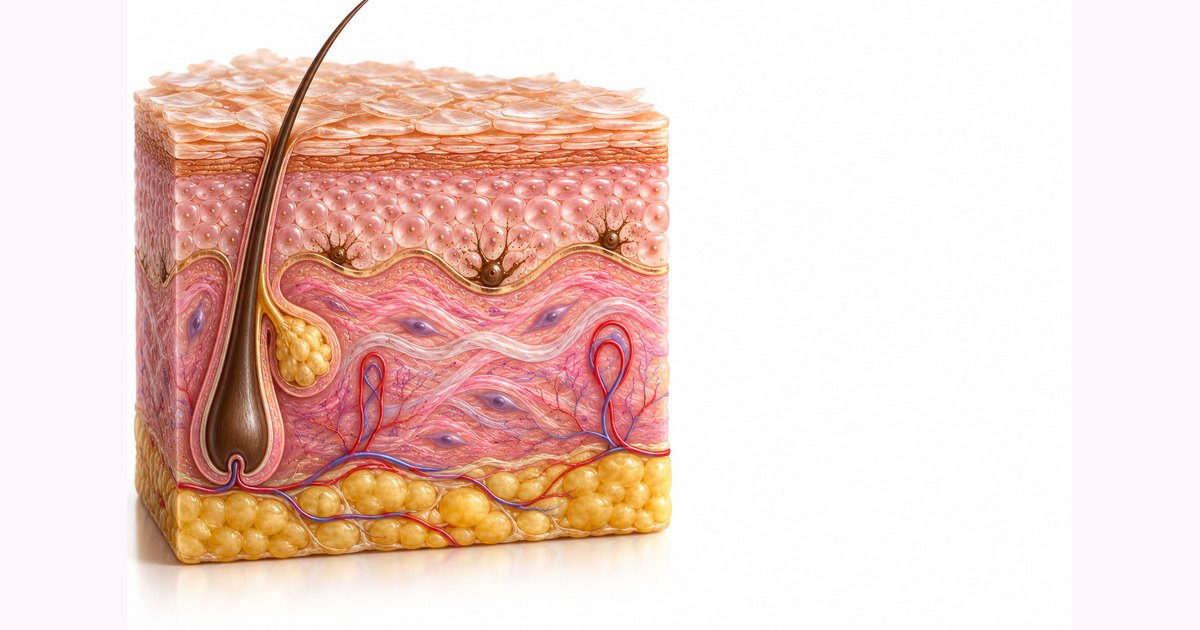
The right microneedling depth is matched to the target concern and to the thickness of the skin being treated — not to the wish for deeper penetration. Fine lines and texture respond to 0.5–1 mm. Atrophic acne scars need 1.5–2.5 mm, and a split-face trial found 2.5 mm outperformed 1.5 mm. Stretch marks and established scars extend to 2–2.5 mm. Area, skin type and recovery tolerance decide the rest. Depth without an indication is trauma; depth matched to pathology is therapy.
How deep should microneedling go for fine lines and wrinkles?
Superficial to moderate depths. For fine lines and surface texture, 0.5 mm is the standard setting — it reaches the base of the epidermis and the top of the papillary dermis, which is where the collagen signal is generated, and it leaves only 24–48 hours of light redness.
For wrinkles visible at rest, 1–1.5 mm is more effective, because it reaches the papillary dermis where solar elastosis and collagen loss accumulate. A 2022 study in the Aesthetic Surgery Journal treated neck wrinkles with a microneedling device at depths up to 2.5 mm over four monthly sessions: 93.8% of subjects showed improvement at one month, and mean wrinkle severity fell 25.9% at 90 days.3 Sessions are spaced 4–6 weeks apart.
The neck and chest are thin and mobile. In routine practice they are kept at 0.5–1 mm — deeper settings there buy prolonged erythema and pigment risk rather than better remodelling.
What depth is right for treating acne scars?
Acne scars sit in the dermis, so the needle has to reach the scar bed to trigger any healing response at all.
Atrophic scars — the commonest type — respond best at 1.5–2.5 mm. This is the one depth question with direct comparative evidence: a 2024 split-face study in the International Journal of Dermatology treated one side of the face at 1.5 mm and the other at 2.5 mm across six sessions in 14 patients. The 2.5 mm side improved significantly more (P = 0.02), clinically and on histology.1 Fourteen patients is a small study, and it is one study — but it is the best available, and it points one way.
Boxcar and rolling scars usually need 1.5–2 mm to release fibrous tethering. Ice-pick scars are poorly served by needling depth alone and are generally combined with focal chemical reconstruction of the scar. A course is typically 4–6 sessions, 4–6 weeks apart.
On Fitzpatrick III–VI skin, the risk of post-inflammatory hyperpigmentation rises above 2 mm. That is the population most Indian clinics treat, and it is the reason the deeper end of the published range is not the default here.
Which depths work for stretch marks and established scars?
Striae and mature surgical scars sit deeper, in the reticular dermis, and need 2–2.5 mm to reach the fibroblasts that matter. Starting a first session at 1.5 mm to gauge tolerance and advancing by the second or third is reasonable practice. Intervals stretch to 6–8 weeks, and downtime is 5–7 days of redness, swelling and sometimes light scabbing — which the patient must be told before, not after.
Early surgical scars (under 12 months) are treated at 1.5–2 mm; facial surgical scars are kept to 1–1.5 mm to limit downtime. Where pigmentation risk is high, prescription depigmenting preparation and strict photoprotection are part of the protocol, not an afterthought.
Should depth change across facial areas?
Yes — but for a more interesting reason than most depth charts admit. Skin thickness genuinely varies across the face: ultrasonographic mapping published in Skin Research and Technology in 2023 found the corner of the mouth thickest and the lateral forehead thinnest.4 That is the opposite of the assumption behind the conventional chart, which treats the forehead as a robust area.
| Area | Working depth | Why |
|---|---|---|
| Under-eye, lid margin | 0.25–0.5 mm | Very thin, highly vascular; bruises readily |
| Cheek | 1–2 mm | Adequate thickness; tolerates scar-depth settings |
| Forehead | 0.5–1.5 mm | Thinner than assumed, especially laterally |
| Nose | 0.5–1 mm | Bony prominence; thin over the bridge |
| Jawline, chin | 1–1.5 mm | Thicker; more downtime tolerance |
| Neck, décolletage | 0.5–1 mm | Thin, mobile, sun-damaged; high pigment risk |
| Body — chest, abdomen, thighs | 1.5–2.5 mm | Thick skin; the striae indication |
Published depth charts vary widely between manufacturers and training bodies, and most trace back to a small number of early sources rather than to measured tissue depth in the patient in front of you. Treat the table above as documented clinical convention with a measured-thickness correction applied — not as trial-derived settings. Where a chart and the skin disagree, the skin is right.
What depth for pigmentation?
Melasma and post-inflammatory hyperpigmentation sit at the dermo-epidermal junction and into the papillary dermis. Surface pigment and mild sunspots respond at 0.5–1 mm. Dermal melasma is sometimes taken to 1–1.5 mm, but every millimetre added raises the chance of causing the very pigment being treated — the reason pigmentation is usually the wrong indication for depth escalation, and the right one for combining gentle needling with topical and light-based work.
How does downtime scale with depth?
- 0.25–0.5 mm — mild redness for 24–48 hours. No crusting.
- 1–1.5 mm — visible erythema 2–3 days, occasional flaking.
- 1.5–2.5 mm — redness, swelling and often scabbing for 4–7 days; full healing 7–10 days.
- Above 2.5 mm — 5–7 days of marked reaction, bruising common, barrier recovery up to two weeks.
All of these run longer on darker skin, on a compromised barrier, and on reactive or rosacea-prone skin.
Is there a risk in going too deep?
Yes, and it is the most common error in practice. The collagen induction response plateaus at moderate depths; past that point the added injury does not buy proportionally more remodelling, but it does buy persistent erythema, bruising, scabbing, infection risk and — on Fitzpatrick IV–VI skin — post-inflammatory hyperpigmentation that can last months.
The working rule: use the shallowest depth that reaches the target. Start at the lower end of the range for the indication and increase only if progress has genuinely plateaued after three or four sessions. Shallower and more frequent will usually beat deeper and fewer across a full course, with far less to apologise for.
This is a practitioner reference and assumes a trained operator, sterile technique and a clinical setting. Depth selection is not a home decision, and the settings above are not instructions for home devices.
Frequently asked questions
Is deeper microneedling always better?
No. Depth is matched to the concern. 0.5 mm reaches the epidermis and suits fine lines and texture. 1–1.5 mm reaches the papillary dermis. 1.5–2.5 mm is for atrophic scars and striae. Beyond the depth that reaches your target, the extra injury adds downtime and pigment risk, not results.
Can the same depth be used across the whole face?
No. Skin thickness varies by site — the under-eye takes 0.25–0.5 mm, the cheek tolerates 1–2 mm, and the neck and décolletage stay at 0.5–1 mm. Measured mapping also shows the lateral forehead is thinner than most depth charts assume.
How often can microneedling be repeated?
Superficial settings every 2–3 weeks. 1–1.5 mm every 4 weeks across a course of four to six sessions. 2–2.5 mm for scars and striae no more often than every 6–8 weeks, so healing completes between sessions.
Is microneedling safe on Indian skin?
Yes, when depth and interval are chosen for the skin type. Fitzpatrick III–VI carries a higher risk of post-inflammatory hyperpigmentation above 2 mm, which is managed with shallower settings, longer intervals, pigment-suppressing preparation where indicated, and strict photoprotection.
What happens if the setting is too deep?
Prolonged redness, bruising, scabbing, raised infection risk and post-inflammatory hyperpigmentation — with no proportional gain in collagen remodelling, because the response has already plateaued. If in doubt, go shallower and repeat.
References
- Ismail ESA, et al. Evaluation of microneedling depth of penetration in management of atrophic acne scars: a split-face comparative study. International Journal of Dermatology, 2024. PubMed 38159109 ↗ — Split-face comparison of 1.5 mm vs 2.5 mm over six sessions in 14 patients; 2.5 mm significantly better clinically and histologically (P = 0.02).
- Singh A, Yadav S. Microneedling: advances and widening horizons. Indian Dermatology Online Journal, 2016. PMC4976400 ↗ — Review; 0.5–1 mm for ageing skin and wrinkles, 1.5–2 mm for routine scar work, 0.5–0.75 mm for periorbital and perioral skin.
- Efficacy and tolerability of a microneedling device for treating wrinkles on the neck. Aesthetic Surgery Journal, 2022;42(10):1154. Aesthet Surg J 2022 ↗ — Four monthly treatments at depths up to 2.5 mm; 93.8% improved at one month, mean wrinkle severity down 25.9% at 90 days.
- Ultrasonographic analysis of facial skin thickness in relation to age, site, sex, and body mass index. Skin Research and Technology, 2023. PubMed 37632182 ↗ — Measured facial skin thickness by site; thickest at the corner of the mouth, thinnest overall at the lateral forehead.
Every source above was opened and checked against the claim it supports before this article was published. Where a published depth chart could not be traced to primary evidence, it is labelled as clinical convention in the text rather than cited as fact.
Medically reviewed by Dr. Fatima Sajeeda — Integrative Medicine Practitioner, Expert in Medical Aesthetics, Cosmetologist & Trichologist · 16+ years · International Faculty, IEB UK · Auraa Skincare Clinic, Film Nagar, Hyderabad
Ask Us About This on WhatsApp← All articles